

Front-Facing vs. Spine-Out Bookshelves for Young Readers
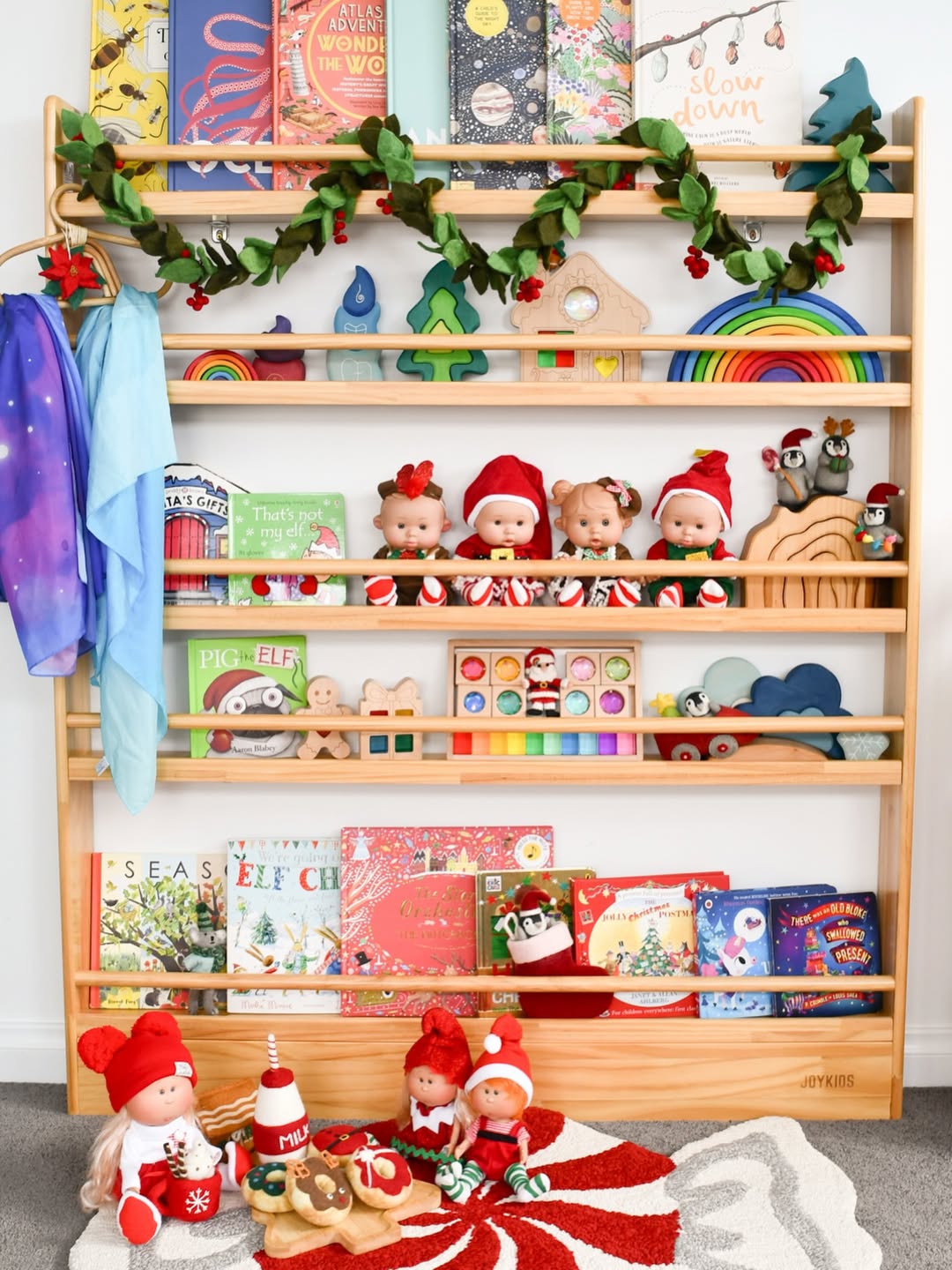
Walk into most homes and you'll find children's books shelved like an adult's — packed in spine-out, tallest to shortest. It looks tidy. But for a child who can't yet read the words on those spines, a wall of vertical text is close to invisible. This is where front-facing bookshelves (also called forward-facing or cover-out shelves) come in — and the reasoning behind them is rooted in how young children actually choose what to read.
Why cover-out display matters before age 7
Early childhood educators have long observed a simple truth: young children select books by their covers, not their titles. A toddler recognizes the picture of a bus or a bear long before they can decode “T-H-E B-U-S.” When books face outward, the cover does the inviting.
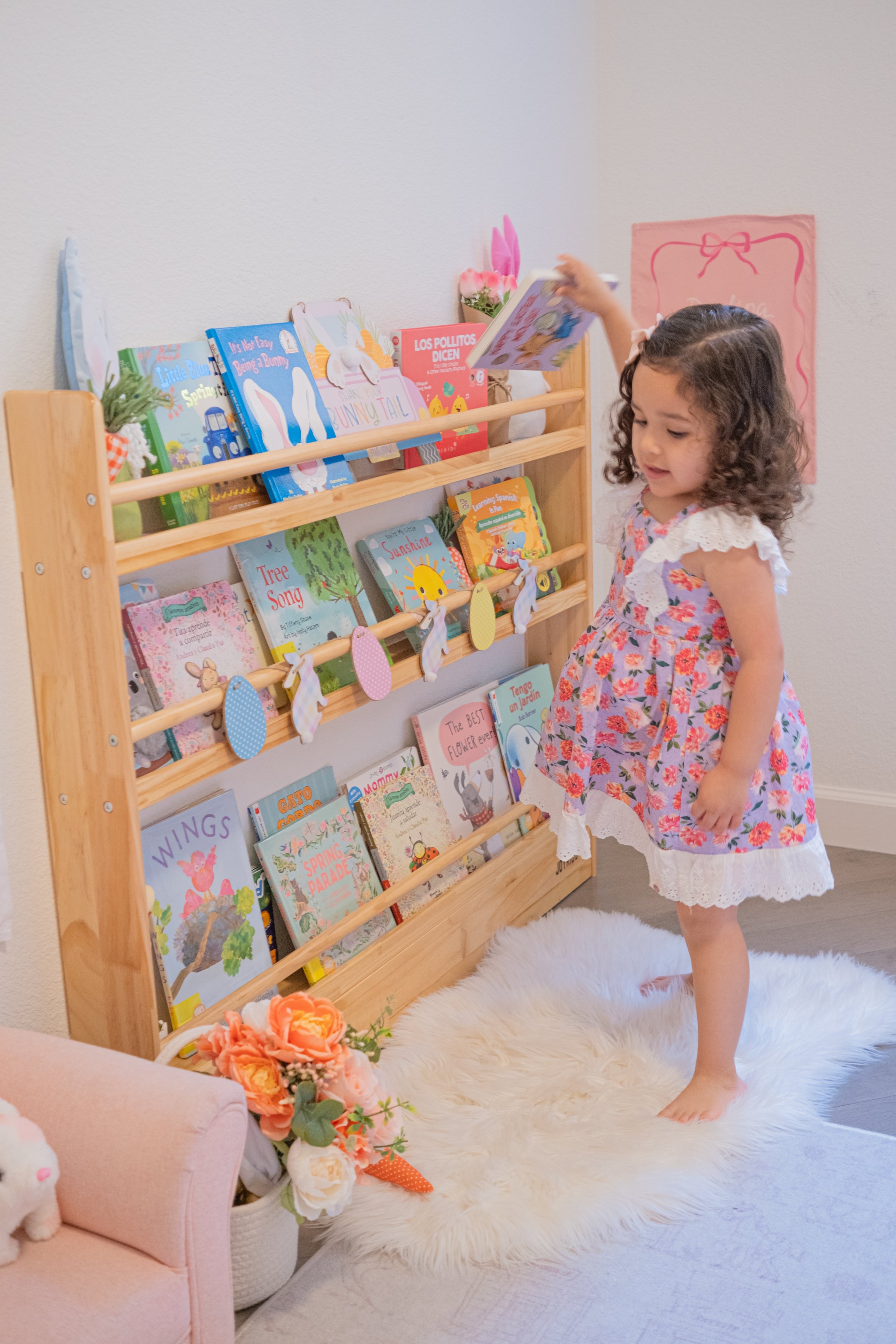
This aligns with the Montessori principle of the prepared environment — the idea that a child's space should make independence possible without adult help. A spine-out shelf requires an adult to read titles aloud or pull books down. A front-facing shelf lets a two-year-old browse, choose, and return a book entirely on their own.
The literacy link: Research on “print exposure” consistently finds that the amount a child engages with books predicts later reading skill. Anything that lowers the barrier to picking up a book — like making covers visible at a child's eye level — increases that exposure.
The four practical benefits
1. More books actually get read. When children can see covers, book selection becomes self-directed. Parents routinely report kids choosing books they'd previously ignored once they were displayed cover-out.
2. Independence and tidying. A clear “one slot, one book” layout makes cleanup intuitive. Children learn where things belong because the shelf shows them.
3. Eye-level access. Low, front-facing shelves like the JORY 3 Front-Facing Bookshelf put books within a small child's reach — no climbing, no asking.
4. A rotating, curated library. Because front-facing shelves hold fewer books at once, they encourage rotation — swapping in 10–20 fresh titles weekly keeps interest high and prevents overwhelm.
How to set one up well
- Match the shelf to the space and age. For a starter nook or shared bedroom, the compact JORY 3 is ideal. For a primary reading zone where a growing library lives, the larger-capacity JORY 5 Front-Facing Bookshelf gives more rotation room without losing the cover-out advantage. Tight on floor space? The wall-mounted JORY W2 frees the floor entirely.
- Curate, don't cram. Display 20–50 books; store the rest out of sight and rotate.
- Let them help. Involving children in choosing the weekly rotation builds ownership.

Does this mean spine-out shelves are bad?
Not at all — they're efficient for older, fluent readers with large collections. The transition typically happens naturally around ages 6–7, once a child reads titles confidently. Many families keep a front-facing shelf for current favorites alongside a traditional shelf for the wider library.
The takeaway
A front-facing bookshelf is a small environmental change with an outsized effect: it turns books from background objects into an open invitation. For children in the crucial pre-reading and early-reading years, that visibility is one of the simplest ways to build a daily reading habit.
Ready to create a reading nook your child will actually use? Explore our front-facing bookshelf range.